The biggest giveaway that you live in a rental flat is the kitchen.
Landlords love cheap, durable, and universally boring design. You are usually stuck with plain white walls that stain easily with cooking grease, or ugly 1990s floral tiles that you are strictly forbidden to remove.
You want a modern, clean “Subway Tile” aesthetic or a vibrant Moroccan pattern, but you can’t hire a tiler or mix grout in a rented property.
The ultimate renter loophole? Peel-and-Stick Tiles.
These are high-tech epoxy and vinyl sheets that look and feel exactly like real glass or ceramic. You cut them with scissors, peel off the backing, and stick them straight onto the wall. When your tenancy ends, you apply heat, peel them off, and get your deposit back in full.
We reviewed the best-selling options on Amazon UK to see which ones look like real ceramic, which ones survive the steam of a boiling kettle, and which ones won’t rip the plaster off when you move.
Visual Comparison: The Kitchen Upgrades
| Spec | Art3d Subway Tiles (10-Pack) | Tic Tac Tiles (3D Gel) | SUHU Retro Tile Stickers (25pc) |
|---|---|---|---|
| Best For | Budget “Blank Wall” Covers | Premium Glass-Look | Covering Ugly Old Tiles |
| Style | White Brick (Subway) | Mosaics / Stone Look | Vintage / Moroccan Patterns |
| Material | PU Gel / Vinyl | High-Grade Epoxy | Thin Vinyl Decal |
| Install Method | Overlapped Sheets | Overlapped Sheets | Individual 15×15cm Squares |
| Renter Rating | ★★★★☆ | ★★★★★ | ★★★★★ |
1. The Classic Pick: Art3d Subway Peel and Stick Tiles
If you have a large, boring painted wall behind your sink and want the classic “White Subway Brick” look, Art3d is the volume king.
Why It’s Renter Friendly
- The “Thicker” Upgrade: Early versions of stick-on tiles felt like cheap contact paper. Art3d’s upgraded version uses a 2.5mm thick PU gel. When pressed onto the wall, it genuinely looks like a grouted ceramic tile from a distance.
- Waterproof Splashback: It acts as a perfect barrier behind the kitchen sink, protecting the landlord’s painted plaster from water stains and rot.
Pros:
- Very affordable for large areas (sold in 10-sheet packs).
- Thick gel hides minor imperfections in the wall behind it.
- Easy to cut straight lines with a utility knife.
Cons:
- The adhesive is incredibly strong. You must use the hairdryer trick (see below) to remove them, or they will rip the paint.
2. The Premium Pick: Tic Tac Tiles
If you want a more complex look like marble, stone mosaic, or intricate glass then Tic Tac Tiles are the premium choice. They use a much higher-grade epoxy resin than the budget brands.
Why It’s Renter Friendly
- No “Yellowing”: Cheap resin tiles often turn yellow after 6 months of exposure to kitchen grease and sunlight. Tic Tac Tiles use an anti-yellowing formula that keeps them looking fresh for the duration of a multi-year tenancy.
- Realistic Overlap: They are designed with a specific “jagged” edge that overlaps perfectly with the next sheet, completely hiding the seams so it looks like one continuous tiled wall.
Pros:
- Most realistic “3D” glossy finish on the market.
- Doesn’t discolour over time.
- Excellent heat and moisture resistance.
Cons:
- Expensive (Approx £40+ for 10 sheets).
3. The “Ugly Tile” Cover-Up: SUHU Retro Tile Stickers
What if you don’t have a blank wall? What if your landlord has covered the kitchen in brown floral tiles from 1982?
You can’t stick thick Art3d sheets over deep grout lines; it will look bumpy and terrible. You need Tile Decals.
Why It’s Renter Friendly
- The “Perfect Fit” Method: These SUHU decals are paper-thin, highly durable vinyl stickers cut exactly to the size of standard UK tiles (15x15cm / 6×6 inches). You simply stick them directly over the old tiles, leaving the original grout lines exposed.
- The Transformation: It instantly changes an ugly brown kitchen into a trendy, colourful Moroccan or Portuguese-style space for under £10.
Pros:
- Cheapest way to completely change a kitchen’s aesthetic.
- Sticks to existing ceramic perfectly.
- Very easy to peel off when the tenancy ends (ceramic tiles don’t peel like painted walls do!).
Cons:
- Requires patience (you have to apply 25 individual squares perfectly straight).
- It is flat (2D), not textured like a real tile.
Annotated Manual: The “Deposit Safe” Removal
The biggest mistake renters make is peeling the backing off a full sheet and trying to jam it into a corner or around a plug socket. The glue is incredibly sticky; if it touches the wall crooked, pulling it off will ruin the tile.
Here is how to get a professional, seamless finish.
How to Install Peel-and-Stick Subway Tiles
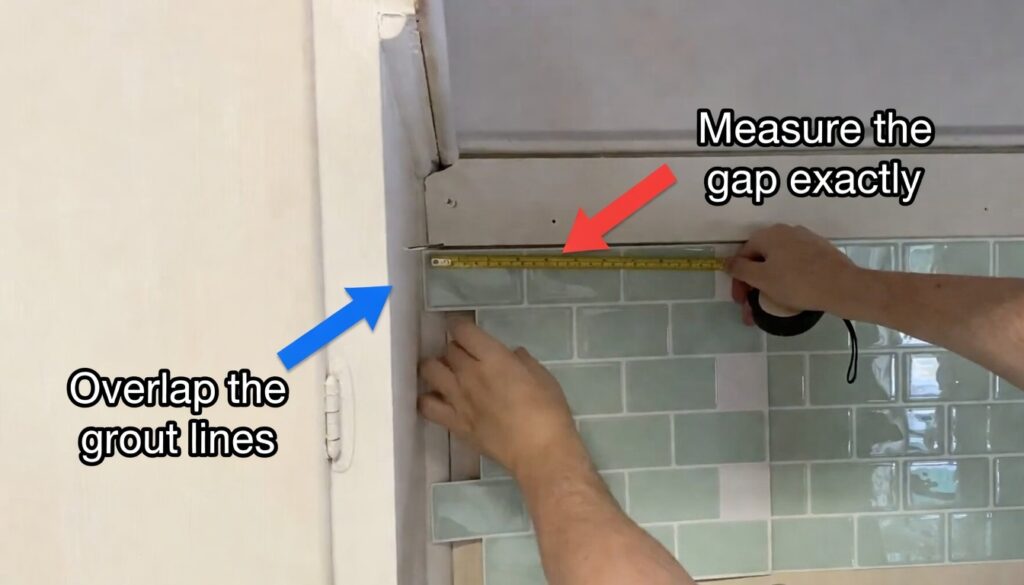
Step 1: The “Grout” Overlap
Subway tile sheets interlock like a jigsaw puzzle. Lay the new sheet over the blank grout tab of the previous sheet.
If you place them side-by-side instead, you will see a visible seam.
Step 2: Measure the Gap
When you reach a wall, window frame, or cabinet, use a tape measure to find the exact remaining width.
Always measure carefully — never guess the cut.
Step 3: The “Score & Snap” Cut
Do not use scissors. Thick 3D gel tiles will squash and leave jagged edges.
- Place the tile flat on a cutting board
- Use a metal ruler and utility knife
- Score a deep line on your measurement
- Snap the tile cleanly before peeling the backing
Step 4: The Renter Removal Rule (Important)
When your tenancy ends, do not pull the tiles off cold.
The adhesive may remove the landlord’s paint.
Instead, heat each tile with a hairdryer on high heat for 6–10 seconds. This softens the adhesive and allows the tile to peel away safely.
Real-World Reality: Community Feedback
We checked the DIY subreddits to see where renters go wrong.
MAINTENANCE
1. “The Bumpy Wall Disaster”
USER REPORT
“I stuck them onto a wall with textured wallpaper. They fell off after 3 days and looked incredibly bumpy.”
💡
The Smart Tenant Fix
These tiles are glossy. Gloss reflects light, which highlights every single bump underneath them.
Our Advice
They only work on flat, smooth surfaces (glass, metal, smooth painted drywall, or existing smooth ceramic). If you have textured wallpaper or a highly uneven wall, you must sand it smooth first (which renters usually can’t do). If your wall is rough, skip this project.
MAINTENANCE
2. “The Peeling Corners”
USER REPORT
“The edges near my kettle are starting to lift and peel away from the wall.”
💡
The Smart Tenant Fix
Steam melts adhesive.
Our Advice
Do not place your kettle or toaster directly underneath a seam where two tiles meet. The constant blast of steam will degrade the glue. Move your kettle to an island or a blank wall.
Frequently Asked Questions
Can I use these in a rental bathroom or shower?
You can use them above the sink, but do not use them inside the shower cubicle. While the front of the tile is waterproof, constant direct running water will eventually seep into the overlapping seams, ruining the adhesive and causing mould to grow behind the tile.
Do I need extra glue or grout?
No. They are entirely self-adhesive. Do not add extra superglue, or you will cause permanent damage to the wall. They also require zero grout. The “grout lines” are printed into the 3D design.
How do I clean them?
Wipe them down with a damp cloth and mild dish soap. Do not use abrasive scourers (like Brillo pads) or harsh chemicals (like bleach), as this will scratch the glossy epoxy finish and make them look dull.
Verdict: Which Tiles for Your Kitchen?
- Best for Blank Walls: Art3d Subway Tiles. The fastest, cheapest way to get a modern, clean, white splashback over boring painted walls.
- Best for Durability & Looks: Tic Tac Tiles. If you want it to look like real, high-end glass mosaic, pay the premium for this brand.
- Best for Covering Old Tiles: SUHU Retro Tile Stickers. Don’t try to put large sheets over ugly tiles; just buy these decals and cover them up square-by-square.